Address common causes of car overheating, including radiator issues, coolant leaks, and thermostat failures, and learn how to fix and prevent future problems.
An overheating engine is one of the most serious problems a vehicle can experience. If your engine temperature rises too high, it can lead to significant damage to internal components such as the head gasket, pistons, and cylinder head.
Understanding the causes of engine overheating and knowing what steps to take can help prevent major repairs and keep your vehicle running safely.
If your temperature gauge begins to rise or you notice steam coming from under the hood, it’s important to address the issue immediately.
Before discussing how to fix overheating problems, it’s important to recognize the warning signs.
Common symptoms of an overheating engine include:
• Temperature gauge rising into the red zone
• Steam coming from under the hood
• A sweet smell from coolant leaking or overheating
• Warning lights appearing on the dashboard
• Engine performance issues
If you notice any of these symptoms, you should stop driving as soon as it is safe to do so.
Continuing to drive an overheating vehicle can cause serious engine damage.
If your engine temperature becomes dangerously high, the first step is to turn off the engine.
Allowing the engine to cool down helps prevent additional damage and reduces pressure in the cooling system.
It’s important not to open the radiator cap while the engine is hot, as hot coolant can cause serious burns.
One of the most common causes of engine overheating is low coolant levels.
Coolant helps regulate engine temperature by absorbing heat and transferring it away from the engine.
If coolant levels are low, the engine may not be able to cool itself effectively.
Once the engine has cooled down, checking coolant levels can help determine whether low coolant may be contributing to the overheating problem.
Cooling system leaks can prevent coolant from circulating properly through the engine.
Common places where leaks may occur include:
• Radiator hoses
• Water pump connections
• Radiator components
• Coolant reservoir tanks
If coolant is leaking, the system may not maintain proper pressure and the engine may overheat.
Leaks should be repaired as soon as possible to prevent further issues.
The radiator plays an important role in cooling the engine by dissipating heat from the coolant.
If the radiator becomes clogged or the cooling fans fail to operate properly, heat may not be removed efficiently from the engine.
This can cause engine temperatures to rise, especially during slow driving or while sitting in traffic.
Professional inspection can determine whether the radiator or cooling fan system is functioning correctly.
The thermostat regulates coolant flow through the engine. When the engine reaches operating temperature, the thermostat opens to allow coolant to circulate through the radiator.
If the thermostat becomes stuck closed, coolant cannot flow properly and the engine may overheat quickly.
A faulty thermostat often requires replacement to restore proper cooling system function.
The water pump is responsible for circulating coolant through the engine and radiator.
If the water pump fails, coolant may not circulate properly and the engine may overheat.
Signs of water pump problems may include:
• Coolant leaks near the front of the engine
• Whining or grinding noises from the pump
• Rapid temperature increases
A failing water pump should be replaced promptly to prevent engine damage.
Even a single overheating incident can cause serious engine damage.
Overheating may lead to:
• Warped cylinder heads
• Blown head gaskets
• Engine component damage
• Expensive engine repairs
Addressing cooling system problems early can prevent more serious mechanical issues.
Routine maintenance can help reduce the risk of engine overheating.
Important maintenance tasks include:
• Checking coolant levels regularly
• Flushing and replacing coolant when recommended
• Inspecting radiator hoses and connections
• Monitoring engine temperature gauges
• Scheduling regular vehicle inspections
Keeping your cooling system in good condition helps ensure your engine operates safely and efficiently.
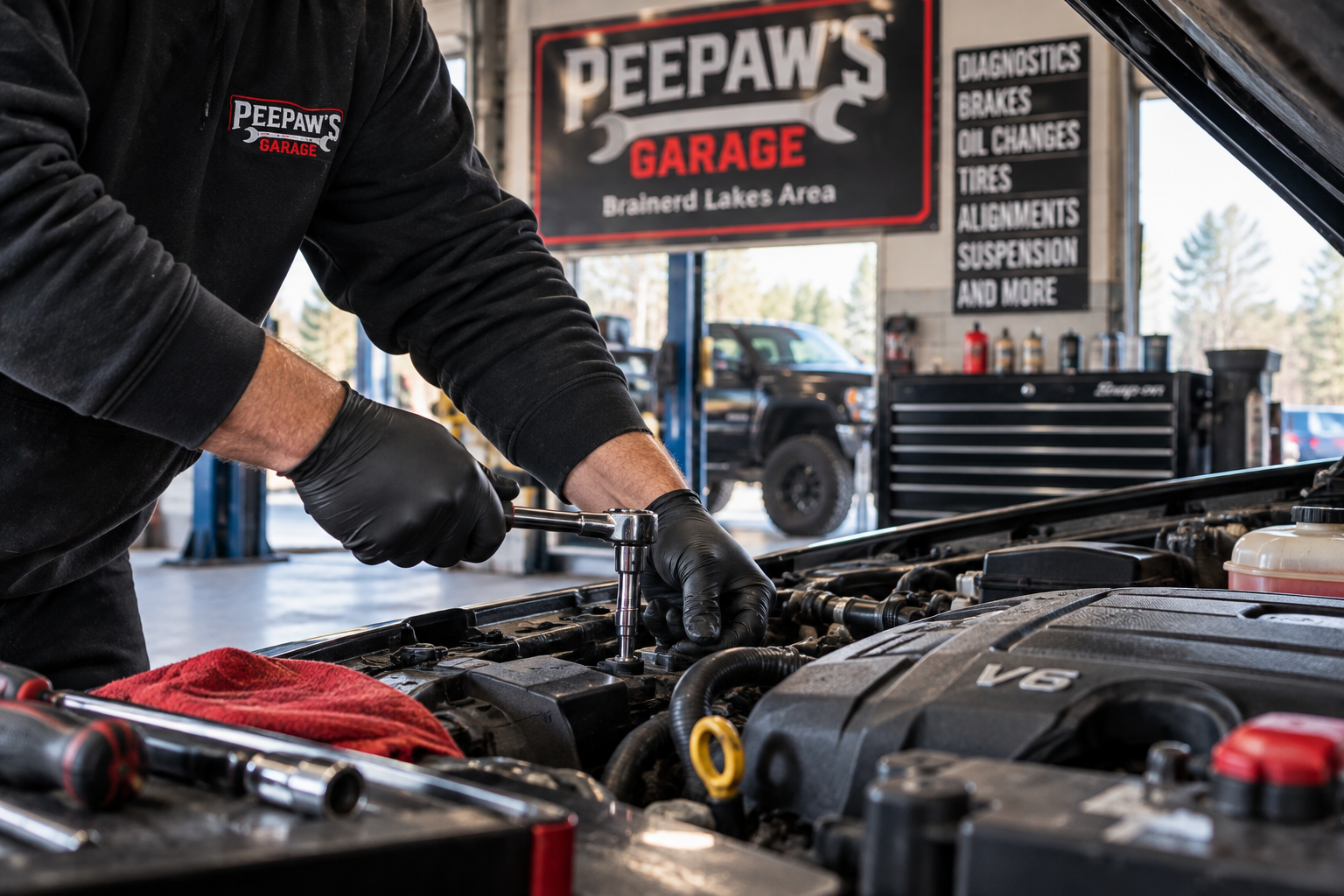
If your vehicle is overheating or experiencing cooling system issues, the technicians at Peepaw’s Garage are here to help. We provide professional engine diagnostics and cooling system inspections for drivers throughout the Brainerd Lakes Area, including Brainerd, Baxter, Nisswa, Pequot Lakes, Merrifield, East Gull Lake, Lake Shore, and Pillager.
Our team can identify the cause of overheating and recommend the proper repairs to restore safe engine operation.
Contact Peepaw’s Garage today to schedule a vehicle inspection and prevent overheating from damaging your engine.